
SEO is important for digital marketing Search Engine Optimization, commonly known as SEO, is one of the most important parts of digital marketing. In a world where people search online before making decisions, businesses need to make sure their websites can be found by the right audience. SEO helps websites improve their visibility on search engines such as Google and attract visitors without depending entirely on paid advertising.
Digital marketing includes many different activities, such as social media marketing, content marketing, email marketing, online advertising, branding, and search engine optimization. Among these activities, SEO plays an important role because it helps businesses connect with people who are already searching for their products, services, information, or solutions.
When someone searches for a product or service on Google, they usually look at the results displayed on the first page. Websites that appear higher in search results have a better opportunity to receive visitors. SEO helps businesses improve their chances of appearing in relevant search results by optimizing their website, content, technical structure, and online presence.
Understanding what SEO is and why it matters can help business owners, marketers, bloggers, and beginners create a better digital marketing strategy.
What Is SEO?
SEO stands for Search Engine Optimization. It is the process of improving a website and its content so that search engines can better understand, index, and rank the website for relevant searches.
Search engines use complex systems to determine which web pages should appear when someone searches for a particular topic. These systems consider many factors, including content relevance, website structure, page experience, links, mobile usability, technical performance, and the overall usefulness of the page.
SEO is not simply about adding keywords to a website. Modern SEO focuses on creating useful content for people while also making that content easy for search engines to understand.
For example, imagine someone searches for “best digital marketing strategies for small businesses.” A website that has a useful, well-organized article answering that question may have an opportunity to appear in search results.
SEO can help that website improve its visibility by optimizing the title, headings, content, URL, internal links, images, technical structure, and other relevant elements.
How Does SEO Work?
Search engines generally discover, crawl, index, and rank web pages.
First, search engines discover websites and web pages through links and other methods. Search engine crawlers then visit these pages and analyze their content.
The information collected from a page may be stored in the search engine’s index. When a user performs a search, the search engine evaluates relevant pages and determines which results are most useful for that particular query.
SEO helps businesses improve different parts of their websites so search engines can understand their pages more effectively.
However, ranking is not guaranteed simply because a website uses SEO. Search engines consider many signals, and competition can vary significantly depending on the keyword and industry.
This is why SEO should be treated as a long-term digital marketing strategy rather than a quick solution.
Why Is SEO Important for Digital Marketing?
SEO is important for digital marketing because it helps businesses become more visible when potential customers search online.
A strong digital marketing strategy should not only focus on advertising. It should also build long-term visibility and create useful experiences for users.
Here are 10 essential reasons why SEO is important for digital marketing.
1. SEO Increases Website Visibility
One of the main purposes of SEO is to improve a website’s visibility in search engine results.
When your website appears for relevant searches, more people have an opportunity to discover your business.
For example, a local bakery may optimize its website for searches related to cakes, birthday cakes, custom cakes, or bakeries in its city. If the website becomes visible for relevant searches, potential customers may visit the website to learn more.
Better visibility can help businesses reach audiences who may not know about their brand yet.
SEO therefore supports the awareness stage of digital marketing by helping people discover businesses through search.
2. SEO Can Attract Organic Traffic
Organic traffic refers to visitors who reach a website through unpaid search results.
Unlike paid advertisements, organic search traffic does not require a business to pay for every click.
This does not mean SEO is completely free. Businesses may invest time, tools, content creation, technical improvements, or professional services to improve SEO.
However, a well-optimized page can continue attracting visitors after it has been published.
For example, a useful article that ranks well for a popular search query may generate traffic for months or even years if it remains relevant and competitive.
This makes organic search an important part of long-term digital marketing.
3. SEO Helps Reach the Right Audience
Getting thousands of visitors is not always the goal. Businesses need to attract people who are actually interested in what they offer.
SEO helps with audience targeting because users usually search for specific information, products, or services.
For example, someone searching for “social media marketing agency for small businesses” has a different intention from someone searching for “what is social media marketing?”
The first person may be closer to making a purchasing decision, while the second person may simply be learning.
By understanding search intent and creating relevant content, businesses can attract different audiences at different stages of the customer journey.
4. SEO Builds Brand Awareness
When a website consistently appears in relevant search results, people may become more familiar with the brand.
A user might discover a company through a blog article, visit another page later, and eventually become a customer.
This repeated exposure can contribute to brand awareness.
SEO can support brand visibility through informational articles, service pages, product pages, local search optimization, and other types of content.
For example, a digital marketing agency can publish useful articles about SEO, social media marketing, content marketing, Google Ads, and online branding.
When people repeatedly encounter the agency while searching for digital marketing information, the brand can become more recognizable.
5. SEO Improves Website Experience
SEO is not only about search engines. A good SEO strategy can also improve the experience for website visitors.
Website owners may improve page loading speed, mobile usability, navigation, content structure, readability, internal linking, and technical performance as part of their SEO work.
These improvements can make a website easier to use.
For example, a mobile-friendly website is easier to browse on smartphones. Clear headings make long articles easier to read. Descriptive links help visitors understand where they will go next.
A better user experience can support engagement and make it easier for visitors to find the information they need.
6. SEO Supports Content Marketing
Content marketing and SEO work closely together.
Businesses can create blog posts, guides, tutorials, FAQs, case studies, landing pages, videos, and other useful resources.
SEO helps businesses understand what people are searching for and optimize content around relevant topics.
For example, a digital marketing website might create articles about:
- What is SEO?
- How does social media marketing work?
- What are Google Ads?
- How can small businesses use digital marketing?
- What are the benefits of content marketing?
These articles can answer users’ questions while also creating opportunities to attract organic search traffic.
Content marketing provides valuable information, while SEO helps that information become discoverable.
7. SEO Can Generate Leads
SEO can contribute to lead generation by bringing interested users to a website.
Suppose someone searches for “digital marketing services for small businesses” and finds a relevant service page.
If the page clearly explains the service and includes an effective call to action, the visitor may contact the business.
SEO itself does not guarantee leads. The website also needs good content, clear messaging, strong calls to action, trustworthy information, and an easy contact process.
However, attracting relevant organic visitors gives businesses more opportunities to generate leads.
8. SEO Can Support Sales
SEO can influence different stages of the buying journey.
A potential customer might first discover a brand through an informational article. Later, they may read a comparison guide, visit a service page, check testimonials, and eventually contact the business.
This means SEO can support customers from awareness to consideration and, in some cases, conversion.
E-commerce businesses can also optimize product pages for relevant searches.
For example, someone searching for a particular product may discover an optimized product page through Google. If the page provides useful information and a smooth purchasing experience, SEO-generated traffic can contribute to sales.
9. SEO Provides Long-Term Value
Paid advertising can produce immediate visibility, but the traffic usually depends on the advertising budget.
When the budget stops, the advertisements may stop appearing.
SEO works differently.
A successful page can continue receiving organic traffic after publication. However, maintaining rankings requires ongoing attention because search results, competitors, user behavior, and search algorithms can change.
Businesses should regularly update important content, fix technical problems, monitor rankings, and identify new opportunities.
This makes SEO a long-term investment rather than a one-time activity.
10. SEO Helps Businesses Compete Online
Almost every industry has online competition.
Businesses compete for customers through search engines, social media platforms, advertisements, websites, marketplaces, and other digital channels.
SEO gives businesses another way to compete for visibility.
Even smaller businesses can create useful, focused content around specific topics and keywords.
Instead of trying to rank for extremely broad keywords, a business may focus on specific searches that are closely connected to its products or services.
For example, instead of targeting a highly competitive term such as “digital marketing,” a smaller agency may create content around more specific topics related to its target customers.
A focused SEO strategy can help businesses identify realistic opportunities.
Main Types of SEO
SEO can be divided into several major areas.
On-Page SEO
On-page SEO focuses on elements that exist on a website page.
Important elements include:
- Page titles
- Headings
- Keywords
- Content quality
- Meta descriptions
- URLs
- Internal links
- Image optimization
- Content structure
The goal is to make the page useful to visitors and understandable to search engines.
Technical SEO
Technical SEO focuses on the technical aspects of a website.
It can include:
- Website speed
- Mobile usability
- Crawlability
- Indexability
- Site architecture
- XML sitemaps
- HTTPS
- Structured data
- Broken links
- Technical errors
A technically healthy website makes it easier for search engines to access and understand its pages.
Off-Page SEO
Off-page SEO refers to activities outside the website that can support its authority and visibility.
One major component is link building, where other websites link to your website.
Other activities can include digital PR, brand mentions, partnerships, and other legitimate methods of building online authority.
The focus should be on earning relevant and trustworthy recognition rather than obtaining links through manipulative techniques.
Local SEO
Local SEO helps businesses become more visible for location-based searches.
It can be particularly useful for restaurants, agencies, salons, shops, clinics, service providers, and other businesses serving specific geographic areas.
Local SEO may involve optimizing business information, creating location-specific content, managing business profiles, and maintaining consistent business details across relevant platforms.
SEO and Keywords
Keywords are an important part of SEO.
A keyword is a word or phrase that people enter into a search engine.
Examples include:
- Digital marketing agency
- SEO services
- Social media marketing
- SEO for small businesses
- Google Ads management
- Content marketing strategies
However, SEO should not focus only on repeating a keyword.
Search engines have become much better at understanding topics, context, and user intent.
Content should naturally address the topic rather than forcing the same phrase repeatedly.
Keyword research should help you understand what your audience wants to know.
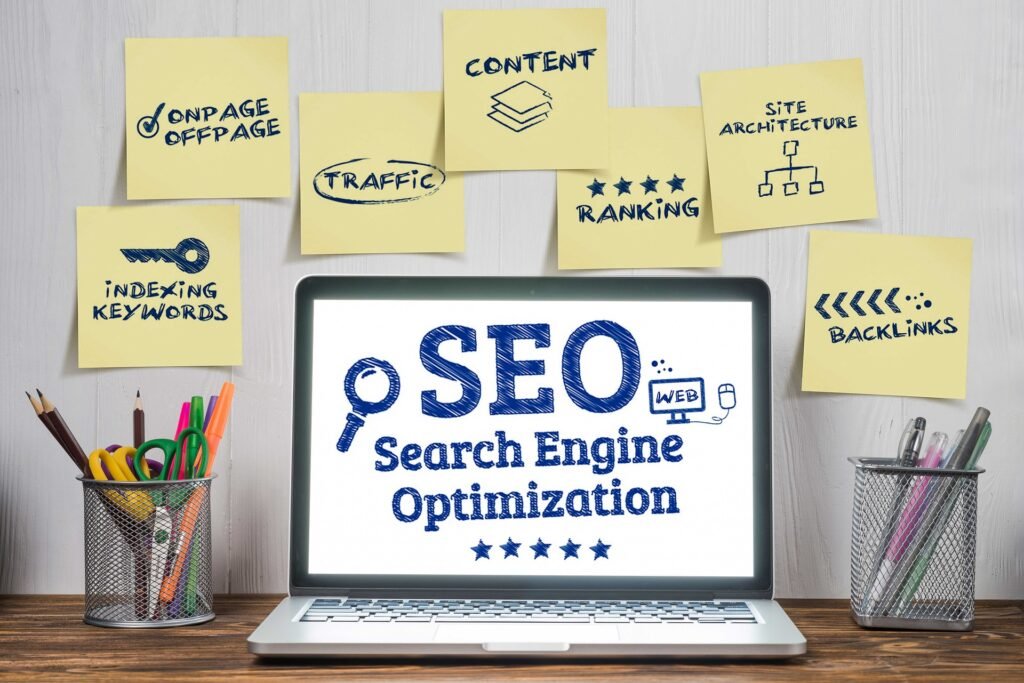
Understanding Search Intent
Search intent refers to the reason behind a user’s search.
There are several common types of search intent.
Informational Intent
The user wants to learn something.
Example:
“What is SEO?”
Navigational Intent
The user wants to find a particular website or brand.
Example:
“Google Search Console”
Commercial Intent
The user is researching products or services before making a decision.
Example:
“best SEO tools for small businesses”
Transactional Intent
The user is ready to take an action such as buying or signing up.
Example:
“buy SEO software”
Understanding search intent helps marketers create content that matches what users actually need.
SEO vs Paid Advertising
SEO and paid advertising are both valuable digital marketing strategies, but they work differently.
SEO focuses on improving organic visibility, while paid advertising involves paying platforms to display advertisements.
Paid advertising can provide quick visibility and immediate traffic when campaigns are properly configured.
SEO usually takes longer to produce meaningful results, but successful organic pages can continue attracting traffic without paying for every individual click.
Many businesses benefit from using both.
Paid advertising can support short-term campaigns, promotions, launches, and immediate traffic goals, while SEO can build long-term organic visibility.
SEO and Social Media Marketing
SEO and social media marketing can work together as part of a broader digital marketing strategy.
Social media platforms can help businesses distribute content and reach audiences.
SEO can help that content and the website attract people through search.
For example, a business may publish an SEO-focused blog article, share it on LinkedIn, Instagram, Facebook, or other platforms, and use the content to attract visitors.
Social media activity can increase awareness and content distribution, while SEO focuses on search visibility.
Using multiple digital channels can create a stronger overall online presence.
Common SEO Mistakes to Avoid
Businesses sometimes make SEO mistakes that can reduce the effectiveness of their strategy.
Keyword Stuffing
Repeating keywords excessively can make content difficult to read and may create a poor user experience.
Use keywords naturally and focus on answering the user’s question.
Creating Content Only for Search Engines
Content should be created primarily to help people.
Writing articles simply to target keywords without providing useful information can produce weak results.
Ignoring Mobile Users
A large amount of online activity happens on mobile devices.
A website should be easy to navigate and read on different screen sizes.
Ignoring Technical SEO
Excellent content may struggle if search engines cannot properly crawl or index the website.
Technical SEO should therefore be part of the overall strategy.
Publishing Without Research
Creating content without understanding the target audience, search intent, competition, or topic can make SEO less effective.
Research should come before content creation.
Expecting Immediate Results
SEO usually requires patience.
Depending on competition, website authority, content quality, technical health, and other factors, meaningful results may take time.
How to Create an Effective SEO Strategy
An SEO strategy should be based on clear goals.
Start by identifying your target audience.
Next, research relevant topics and keywords.
Then analyze search intent and competing pages.
Create useful, original, well-structured content.
Optimize titles, headings, URLs, images, internal links, and other on-page elements.
Make sure the website is technically healthy and mobile-friendly.
Build legitimate authority through high-quality content, relationships, digital PR, and relevant links.
Finally, measure performance and improve the strategy based on data.
SEO should be treated as an ongoing process rather than something completed once.
Important SEO Metrics to Track
Measuring SEO performance helps businesses understand what is working.
Some useful metrics include:
Organic Traffic
Shows how many visitors are arriving through organic search.
Keyword Rankings
Shows how pages perform for targeted search queries.
Click-Through Rate
Shows how frequently users click your search result after seeing it.
Impressions
Shows how often your pages appear in search results.
Engagement
Can help you understand whether visitors are finding your content useful.
Conversions
Shows whether organic traffic is contributing to business goals such as inquiries, sign-ups, purchases, or downloads.
Looking at multiple metrics provides a more complete picture than focusing on rankings alone.
The Future of SEO
SEO continues to evolve as search technology changes.
Search engines increasingly understand natural language, context, entities, user intent, and different forms of content.
Artificial intelligence is also changing how people search for information and how marketers create and optimize content.
However, the fundamental goal remains important: provide useful, trustworthy, relevant information that helps users.
Businesses should avoid building their entire strategy around temporary trends.
Instead, they should focus on strong fundamentals such as useful content, technical quality, clear website structure, credibility, user experience, and understanding the audience.
SEO Is Important for Digital Marketing
SEO Is Important for Digital Marketing because it helps businesses improve their online visibility and attract organic traffic. SEO Is Important for Digital Marketing as it allows websites to rank higher in search engine results and reach potential customers. Today, SEO Is Important for Digital Marketing for businesses seeking sustainable online growth.
SEO Is Important for Digital Marketing because it helps companies connect with their target audience. By using relevant keywords, creating quality content, and optimizing web pages, businesses can improve their search rankings. SEO Is Important for Digital Marketing because it increases brand awareness and helps customers discover useful products and services.
SEO Is Important for Digital Marketing when businesses want to generate organic traffic without paying for every click. A well-optimized website can attract visitors over time. SEO Is Important for Digital Marketing because it provides long-term value and supports cost-effective marketing strategies.
SEO Is Important for Digital Marketing because user experience affects website performance. Fast-loading pages, mobile-friendly designs, clear navigation, and relevant content help visitors find information easily. SEO Is Important for Digital Marketing because these improvements can encourage users to stay longer and explore more pages.
SEO Is Important for Digital Marketing for small businesses and large companies alike. Local SEO helps businesses reach nearby customers, while e-commerce SEO helps online stores attract shoppers. SEO Is Important for Digital Marketing because it supports different business goals and audience needs.
SEO Is Important for Digital Marketing when building trust and credibility online. Websites with helpful content and strong technical performance can establish a positive reputation. SEO Is Important for Digital Marketing because consistent optimization helps businesses remain competitive in changing search environments.
SEO Is Important for Digital Marketing because keyword research identifies what people search for online. Creating useful articles, optimizing titles, improving meta descriptions, and earning quality backlinks can strengthen website performance. SEO Is Important for Digital Marketing when these techniques are applied naturally and consistently.
SEO Is Important for Digital Marketing because performance tracking helps marketers measure progress. Tools such as Google Analytics and Google Search Console provide insights into traffic, clicks, and user behavior. SEO Is Important for Digital Marketing because these insights support better decisions.
In conclusion, SEO Is Important for Digital Marketing because it improves visibility, attracts relevant visitors, and supports business growth. SEO Is Important for Digital Marketing as an essential strategy for reaching customers and building a stronger online presence.
Table of Contents
The Role of SEO in Modern Online Business
In the modern business world, SEO Is Important for Digital Marketing because it helps brands reach people searching for relevant information online. SEO Is Important for Digital Marketing when companies want to improve website visibility and attract potential customers. SEO Is Important for Digital Marketing because search engines connect businesses with interested audiences.
Improving Website Visibility
A website needs more than an attractive design to succeed online. SEO Is Important for Digital Marketing because optimized pages can appear in relevant search results. SEO Is Important for Digital Marketing when businesses use appropriate keywords, informative headings, and descriptive page titles. SEO Is Important for Digital Marketing because better discoverability can bring more qualified visitors.
Creating Valuable Content
Content plays an essential role in attracting and educating customers. SEO Is Important for Digital Marketing because useful articles answer questions and solve audience problems. SEO Is Important for Digital Marketing when businesses publish original guides, tutorials, and service descriptions. SEO Is Important for Digital Marketing because relevant content helps users understand a brand’s expertise.
Enhancing User Experience
Visitors expect websites to load quickly and work smoothly on different devices. SEO Is Important for Digital Marketing because mobile-friendly layouts improve accessibility. SEO Is Important for Digital Marketing when businesses simplify navigation and improve page speed. SEO Is Important for Digital Marketing because a convenient website encourages visitors to explore information.
Building Customer Trust
Online credibility influences purchasing decisions. SEO Is Important for Digital Marketing because consistent, helpful information can strengthen a brand’s reputation. SEO Is Important for Digital Marketing when companies maintain accurate pages and secure websites. SEO Is Important for Digital Marketing because trust helps establish stronger relationships with potential customers.
Supporting Business Growth
SEO can benefit startups, local businesses, and established organizations. SEO Is Important for Digital Marketing because local optimization helps nearby customers discover services. SEO Is Important for Digital Marketing when online stores improve product descriptions. SEO Is Important for Digital Marketing because relevant organic traffic creates opportunities for inquiries and sales.
Measuring Marketing Performance
Businesses need reliable information to improve their strategies. SEO Is Important for Digital Marketing because analytics reveal traffic patterns and visitor behavior. SEO Is Important for Digital Marketing when marketers monitor search impressions, clicks, and conversions. SEO Is Important for Digital Marketing because performance data supports informed decisions.
Conclusion
SEO Is Important for Digital Marketing because it combines visibility, relevant content, technical improvements, and audience engagement. SEO Is Important for Digital Marketing for sustainable online growth. By applying ethical optimization techniques and reviewing results regularly, businesses can strengthen their digital presence and connect with customers more effectively.
Frequently Asked Questions About SEO
1. What is SEO in digital marketing ?
SEO, or Search Engine Optimization, is the process of improving a website so it can become more visible in organic search results. It helps businesses attract relevant visitors from search engines and supports goals such as brand awareness, traffic, leads, and sales.
2. Why is SEO important for digital marketing ?
SEO is important because it can increase website visibility, attract organic traffic, reach relevant audiences, support content marketing, improve user experience, generate leads, and provide long-term online visibility.
3. How long does SEO take to show results ?
SEO does not have a fixed timeline. Results can depend on competition, website authority, content quality, technical performance, industry, and the SEO strategy being used. Some changes may produce improvements relatively quickly, while competitive keywords can take much longer.
4. Is SEO free ?
Organic search results do not require businesses to pay search engines for every click. However, SEO can involve costs for content creation, tools, technical development, professional services, and time.
5. What are the main types of SEO ?
The main types include on-page SEO, technical SEO, off-page SEO, and local SEO. Each focuses on a different part of improving a website’s search visibility.
6. What is on-page SEO ?
On-page SEO involves optimizing elements on individual web pages, including content, headings, titles, URLs, keywords, images, internal links, and meta information.
7. What is technical SEO ?
Technical SEO focuses on the technical structure and performance of a website. It can include crawlability, indexing, site speed, mobile usability, website architecture, HTTPS, structured data, and technical errors.
8. What is off-page SEO ?
Off-page SEO involves activities outside your website that can support its authority and visibility. Link building, digital PR, brand mentions, and relevant online relationships can be part of off-page SEO.
9. Are keywords still important for SEO ?
Yes. Keywords can help marketers understand what people are searching for and create relevant content. However, keywords should be used naturally rather than repeated excessively.