
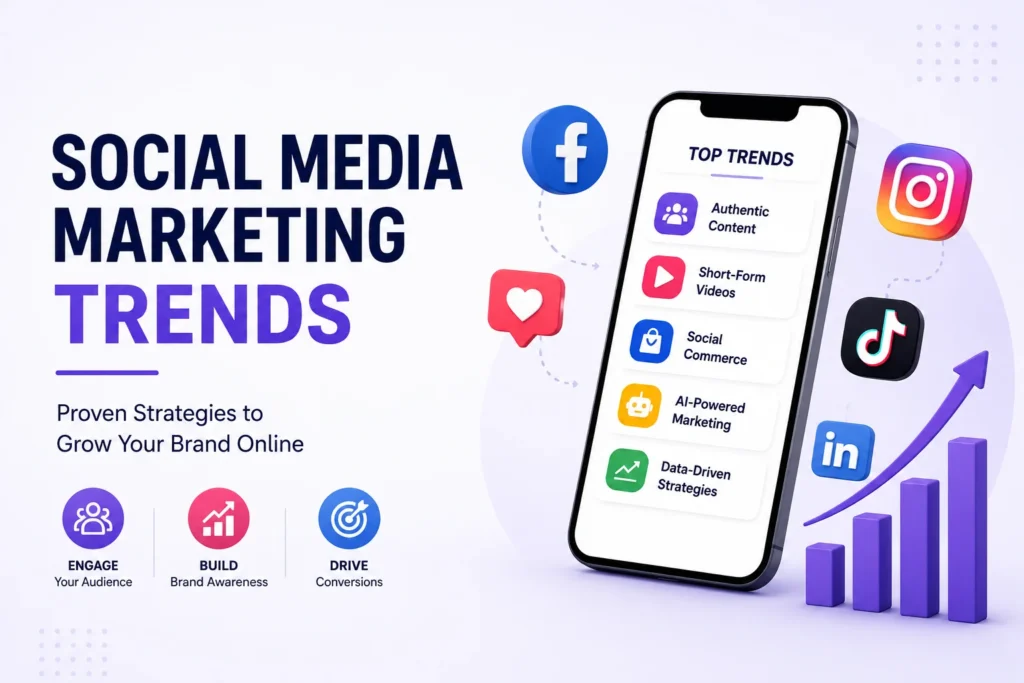
Social media marketing continues to change rapidly, and 2026 is bringing major shifts in how businesses attract, engage, and convert their audiences. Social platforms are no longer used only for posting updates or building followers. They have become important channels for discovery, search, shopping, customer service, community building, and brand growth.
For businesses, staying updated with the latest social media marketing trends is essential. What worked a few years ago may not deliver the same results today. Algorithms are becoming more personalized, short-form video remains highly influential, artificial intelligence is becoming part of everyday marketing workflows, and consumers increasingly expect authentic communication from brands.
Recent 2026 research shows that social media is moving from follower-based discovery toward interest-based discovery. Content quality, relevance, authenticity, and audience behavior are becoming increasingly important.
Here are some of the most important social media marketing trends to watch in 2026.
1. AI-Powered Social Media Marketing
Artificial intelligence has become one of the biggest developments in digital marketing. In 2026, businesses are using AI to generate ideas, write captions, analyze data, create visuals, edit videos, identify trends, and improve content workflows.
HubSpot reports that 94% of social media marketers use AI in their workflows in some capacity, while 73% report using generative AI for social content creation.
However, AI does not mean businesses should completely automate their social media presence. Audiences can quickly recognize repetitive or generic content.
The better approach is to use AI as an assistant rather than a replacement for human creativity. Marketers can use AI for research and efficiency while adding personal experiences, original ideas, brand personality, and human storytelling.
2. Short-Form Video Will Remain Powerful
Short-form videos continue to dominate social media. Instagram Reels, TikTok videos, YouTube Shorts, and similar formats provide businesses with opportunities to communicate ideas quickly and attract attention.
Short videos can be used for product demonstrations, tutorials, behind-the-scenes content, customer stories, educational tips, testimonials, and entertainment.
Research from Metricool analyzing millions of videos across TikTok, Instagram, and YouTube shows that performance varies by platform, but short-form video remains an important part of social media strategy.
In 2026, businesses should focus less on simply creating more videos and more on creating useful, interesting, and memorable videos.
A strong opening in the first few seconds, clear messaging, subtitles, visual movement, and a simple call to action can make short-form content more effective.
3. Social Search Is Becoming More Important
Social media is increasingly functioning as a search engine.
People use platforms such as TikTok, Instagram, YouTube, Pinterest, and Reddit to discover products, businesses, tutorials, reviews, restaurants, destinations, and answers to everyday questions.
This means social media marketing now needs to consider search optimization. Hootsuite’s 2026 trends research highlights the growing importance of adapting social content for search and discoverability.
Businesses should naturally include relevant keywords in captions, video titles, on-screen text, descriptions, and spoken content.
For example, instead of creating a video with a generic title such as “Today’s Marketing Tip,” a business could create “5 Social Media Marketing Tips for Small Businesses.”
This makes the content clearer for both users and search systems.
4. Authentic Content Will Beat Overly Polished Content
Consumers are becoming more selective about the content they trust.
Highly polished advertisements still have their place, but audiences often connect more strongly with content that feels natural and relatable. Behind-the-scenes videos, employee stories, customer experiences, product demonstrations, and real conversations can help businesses appear more authentic.
HubSpot’s 2026 research found that 77% of social media marketers say authenticity is more important than production value when creating content.
This does not mean businesses should stop caring about quality. Instead, quality should support authenticity rather than hide it.
A simple video with a genuine message can sometimes perform better than an expensive advertisement that feels disconnected from the audience.
5. Micro-Influencers and Niche Creators Will Grow
Influencer marketing is moving beyond celebrity endorsements.
Micro-influencers and niche creators often have smaller but highly engaged communities. Their audiences may trust their recommendations because the relationship feels more personal.
In 2026, brands are increasingly evaluating creators based on audience relevance, trust, engagement, storytelling ability, and business results rather than follower count alone.
For example, a local fitness brand may benefit more from working with several fitness creators in its target city than from hiring one celebrity with millions of unrelated followers.
Businesses should therefore look for creators whose audience closely matches their target customers.
6. Social Commerce Will Continue Growing
Social media is becoming increasingly connected with online shopping.
Users can discover a product through a video, learn about it from a creator, read comments, visit a product page, and make a purchase without leaving the social ecosystem in some cases.
HubSpot’s 2026 research identifies social commerce as an important development, with marketers expecting more shopping activity to happen through social platforms.
Businesses should make their social content useful for buyers by including product demonstrations, comparisons, customer reviews, FAQs, benefits, and clear calls to action.
Social media is no longer only about awareness. It can support multiple stages of the customer journey.
7. Community Building Will Become a Bigger Priority
Having thousands of followers does not automatically mean having a strong social media presence.
In 2026, businesses are paying more attention to building communities around shared interests and values. Community-focused marketing can include private groups, comment discussions, live sessions, direct messages, polls, user-generated content, and interactive posts.
A strong community can increase trust and encourage repeat engagement.
Instead of asking only, “How many people saw our post?” businesses should also ask:
- Did people comment?
- Did they start conversations?
- Did they share the content?
- Did they return to the page?
- Did they become customers?
- Did they recommend the brand to others?
These questions provide a better understanding of audience relationships.
8. User-Generated Content Will Build Trust
User-generated content, or UGC, is content created by customers rather than directly by a brand.
Examples include product reviews, testimonials, unboxing videos, customer photos, before-and-after content, and customer experiences.
UGC can make a brand feel more trustworthy because potential customers can see real people using a product or service.
Businesses can encourage UGC by asking customers to share their experiences, creating branded challenges, offering recognition, or simply reposting valuable customer content with permission.
The key is to make the content feel genuine rather than overly scripted.
9. Social Media Will Become a Stronger Customer Service Channel
Customers increasingly expect businesses to respond quickly on social platforms.
Questions about products, prices, delivery, services, availability, and complaints can appear in comments or direct messages.
Social media therefore needs to be treated as more than a publishing channel. It can also function as a customer support channel.
Businesses should create clear response processes, monitor comments and messages, and respond professionally.
A quick and helpful response can turn a potential complaint into an opportunity to demonstrate excellent customer service.
10. Data-Driven Content Decisions Will Become Essential
Creating content based only on personal assumptions is becoming less effective.
Social media platforms provide valuable information about reach, watch time, engagement, clicks, audience demographics, saves, shares, and conversions.
In 2026, businesses should use this data to understand what their audiences actually want.
For example, if educational videos consistently receive more saves and shares than promotional posts, the business can create more educational content.
The goal is not to follow every metric blindly. Instead, marketers should identify meaningful patterns and use them to improve future content.
11. Social Platforms Will Continue to Compete for Video Attention
Major social platforms are increasingly emphasizing video-based experiences. Meta, for example, has continued moving toward more video-first discovery experiences, while Instagram and Facebook are placing significant attention on Reels and other video formats.
This creates both an opportunity and a challenge for businesses.
The opportunity is that video can reach new audiences beyond existing followers. The challenge is that competition for attention is extremely high.
Businesses need a recognizable visual style, strong storytelling, and consistent content themes to stand out.
12. Personalization Will Become More Important
Audiences do not all want the same content.
A beginner may need educational information, while an existing customer may want advanced tips, product updates, or special offers.
AI and social media analytics can help marketers understand different audience segments and create more relevant content.
Personalization can include different messages, content formats, offers, and communication styles for different groups.
The more relevant the content is, the greater the possibility of meaningful engagement.
13. Businesses Will Use More Platform-Specific Content
Posting exactly the same content everywhere is becoming less effective.
Each platform has its own audience behavior, culture, content formats, and expectations.
For example:
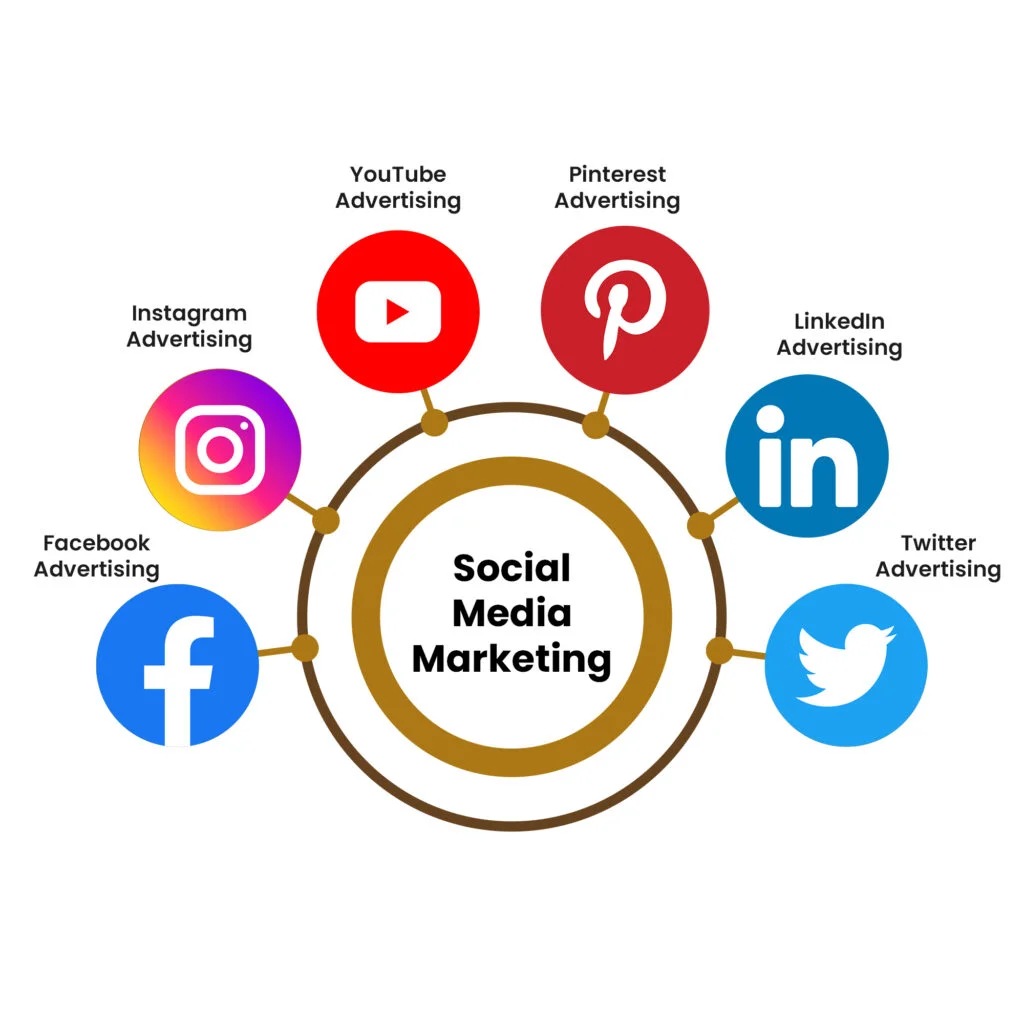
Instagram can focus heavily on Reels, visual storytelling, carousels, and community interaction.
TikTok can emphasize entertaining, educational, trend-driven, and authentic short videos.
LinkedIn can focus on professional insights, business stories, expertise, and thought leadership.
YouTube can support both short-form videos and longer educational content.
A strong social media marketing strategy should therefore adapt the message to each platform instead of simply copying and pasting.
14. Creativity Will Become a Competitive Advantage
AI can help thousands of businesses produce content faster. As a result, simply publishing frequently will not guarantee success.
When content becomes easier to produce, creativity becomes more valuable.
Businesses need a distinctive voice, recognizable visual identity, original ideas, strong storytelling, and a clear understanding of their audience.
The biggest advantage may not be who can produce the most content, but who can create content that people remember.
How Businesses Can Prepare for Social Media Marketing in 2026
Businesses do not need to follow every trend.
Instead, choose trends that match your audience, industry, goals, and resources.
Start by identifying your target audience and the platforms they actually use. Then develop a consistent content strategy around several important themes.
A practical 2026 strategy can include:
- Use AI to improve efficiency.
- Create more short-form video.
- Optimize content for social search.
- Focus on authenticity and human storytelling.
- Work with relevant micro-influencers.
- Encourage user-generated content.
- Build an active community.
- Use analytics to improve decisions.
- Provide customer support through social channels.
- Test different formats and learn from the results.
The most successful businesses will not necessarily be the ones that chase every new feature. They will be the ones that understand their audience and adapt intelligently.

Table of Contents
Social Media Marketing Trends in 2026
Social Media Marketing Trends are changing how businesses connect with customers, promote products, and build strong online brands. In 2026, companies must understand the latest Social Media Marketing Trends to stay competitive and reach the right audience. Following Social Media Marketing Trends helps businesses improve engagement, increase visibility, and generate leads.
One of the most important Social Media Marketing Trends is artificial intelligence. AI tools help marketers create captions, generate content ideas, analyze performance, and plan campaigns. Businesses following Social Media Marketing Trends can use AI to save time while maintaining creativity and authenticity.
Short-form video is another major development. Social Media Marketing Trends show that short videos, Instagram Reels, TikTok videos, and YouTube Shorts provide opportunities to attract attention. Businesses can use these Social Media Marketing Trends to share tutorials, product demonstrations, customer stories, and educational content.
Social search is also becoming important. Modern Social Media Marketing Trends encourage businesses to optimize captions, descriptions, hashtags, and video titles with relevant keywords. These Social Media Marketing Trends can help users discover content when searching for products, services, and useful information.
Authenticity is another essential factor. Social Media Marketing Trends highlight the importance of genuine communication, behind-the-scenes videos, and customer experiences. Following these Social Media Marketing Trends can help brands build trust and develop meaningful relationships with their audiences.
Influencer marketing continues to provide valuable opportunities. Current Social Media Marketing Trends encourage businesses to collaborate with creators who understand their target audience. These Social Media Marketing Trends can help brands improve awareness, credibility, and engagement.
Social commerce is also growing. Social Media Marketing Trends demonstrate how businesses can use product demonstrations, reviews, and shopping features to support purchasing decisions. By understanding Social Media Marketing Trends, companies can create content that connects product discovery with sales opportunities.
Community building is another important strategy. Social Media Marketing Trends encourage brands to communicate with followers through comments, messages, polls, and live sessions. These Social Media Marketing Trends help businesses develop loyal communities and encourage repeat engagement.
User-generated content is becoming increasingly valuable. Many Social Media Marketing Trends focus on customer reviews, testimonials, photos, and videos. Businesses can use these Social Media Marketing Trends to showcase real experiences and build customer confidence.
Data analytics also plays a major role. Social Media Marketing Trends encourage marketers to monitor reach, engagement, clicks, shares, and conversions. Analyzing these Social Media Marketing Trends helps businesses identify successful content and improve future campaigns.
Personalization is another growing opportunity. Social Media Marketing Trends suggest creating relevant content for different audience groups. Businesses that understand Social Media Marketing Trends can develop more effective communication strategies and improve customer experiences.
In conclusion, Social Media Marketing Trends offer valuable opportunities for businesses of every size. From AI and short-form videos to influencer partnerships and social commerce, these Social Media Marketing Trends continue to influence digital marketing strategies. Businesses that follow Social Media Marketing Trends can improve brand awareness, connect with customers, and support long-term growth. Staying updated with Social Media Marketing Trends is essential for building a successful social media presence in 2026.
Conclusion
Social media marketing in 2026 is becoming more intelligent, personalized, searchable, community-driven, and commerce-focused. AI is changing how marketers create content, while authenticity is becoming increasingly important for building trust. Short-form video remains a powerful format, social search is changing discovery, and creators and communities are becoming valuable parts of brand strategy.
For businesses, the goal should not simply be to gain more followers. The real objective is to build awareness, create meaningful relationships, provide value, generate leads, and turn attention into long-term growth.
By understanding these social media marketing trends and continuously testing what works for their audience, businesses can build a stronger and more effective social presence throughout 2026.
Frequently Asked Questions
1. What are the biggest social media marketing trends in 2026 ?
The major trends include AI-assisted content creation, short-form video, social search, authentic content, micro-influencer marketing, social commerce, user-generated content, community building, personalization, and data-driven content strategies.
2. Is AI important for social media marketing in 2026 ?
Yes. AI is becoming an important part of social media workflows. Businesses can use it for brainstorming, captions, content planning, image creation, video editing, analytics, and other repetitive tasks. However, human creativity and judgment remain important.
3. Will short-form video still be effective in 2026 ?
Yes. Short-form video remains one of the most important content formats across major social platforms. Businesses can use short videos for education, entertainment, product demonstrations, tutorials, testimonials, and brand storytelling.
4. How can small businesses use social media trends?
Small businesses should focus on a few platforms where their target audience is active. They can create short videos, educational content, customer testimonials, UGC, and helpful posts while using analytics to understand what performs best.
5. What is the future of social media marketing?
The future of social media marketing is likely to involve greater AI assistance, stronger social search, personalized content, creator partnerships, community-driven marketing, social commerce, and increasingly authentic brand communication.